

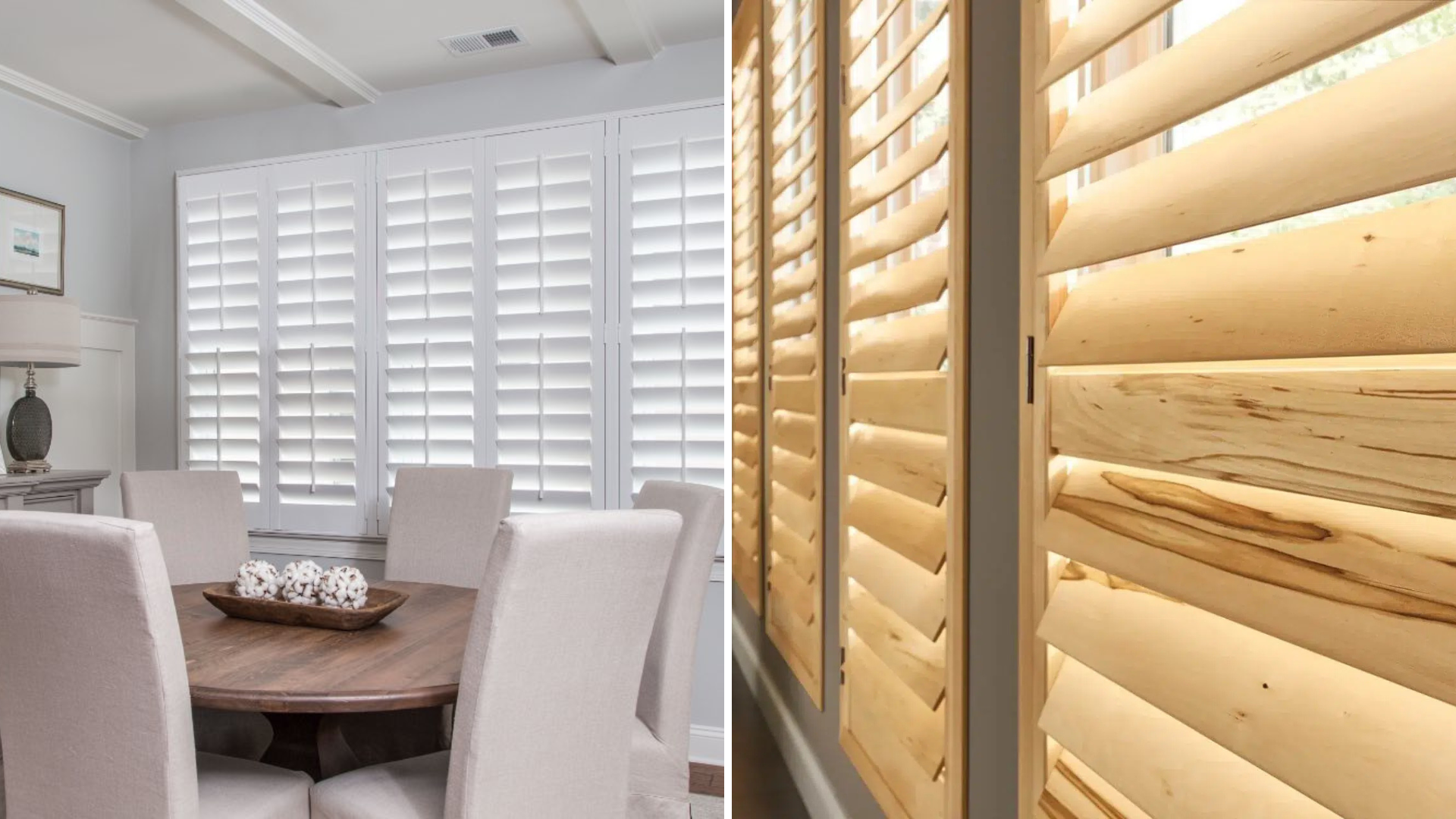
Interior shutters are one of the most classic window treatment choices out there, but the shutter itself usually comes down to one big decision. Do you go with real wood, or composite wood? Both look great and both have loyal fans, but they perform pretty differently depending on where in your home they’re going and what you’re hoping to get out of them.
What Composite Wood Shutters Are
Composite wood shutters, sometimes called faux wood shutters, are made from a mix of engineered wood and synthetic materials. They’re built to mimic the look of real wood while adding some durability that natural wood simply can’t match in certain conditions.
Moisture and heat resistance. This is where composite really shines. Composite shutters hold up well in bathrooms, kitchens, laundry rooms, or any space that deals with humidity or big temperature swings. Real wood can warp or crack in those conditions over time, but composite is built to handle it.
Low maintenance. Composite shutters are easy to clean and don’t require any special care to keep them looking good. A simple wipe down is usually all it takes.
Consistent finish. Because they’re engineered rather than grown, composite shutters tend to have a more uniform color and grain pattern across the entire set, which some homeowners actually prefer for a clean, consistent look.
Budget friendly. Composite shutters are generally more affordable than real wood, which makes them an appealing option for larger projects or homes with a lot of windows to cover.
What Real Wood Shutters Are
Real wood shutters are crafted from natural hardwood, and there’s a reason they’ve remained a top choice for decades. They bring a warmth and authenticity that’s genuinely hard to replicate with any synthetic material.
Natural beauty. Every panel has its own unique grain pattern, giving real wood shutters a richness and character that composite options can’t fully match.
Lightweight strength. Real wood tends to be lighter than composite, which matters more than people expect on larger windows or oversized panels, where weight can affect how smoothly the shutters operate over time.
Long term value. Well maintained real wood shutters can last for decades and tend to add a noticeable boost to a home’s overall look and resale appeal.
Customization options. Real wood takes stain and paint beautifully, giving you more flexibility to match specific finishes or design details throughout your home.
Where Each One Makes the Most Sense
Composite wood shutters are usually the better fit for bathrooms, kitchens, basements, or any room where humidity or temperature swings are a regular thing. They’re also a solid choice if you’re covering a lot of windows and want a consistent look without the higher price tag of real wood throughout the whole house.
Real wood shutters tend to make more sense in living rooms, dining rooms, bedrooms, and other spaces where humidity isn’t a concern and you want the richest possible look. They’re also a great fit for larger windows where the lighter weight of real wood helps the shutters operate smoothly for years to come.
Plenty of homeowners actually mix the two, going with composite in bathrooms and kitchens while choosing real wood for the rest of the house. That combination gets you durability where it matters most and natural beauty where moisture isn’t a factor.
Maintenance Differences Worth Knowing
Both options are relatively low maintenance compared to fabric window treatments, but there are some differences worth knowing. Composite shutters can typically be wiped down with a damp cloth without any concern, since they’re built to handle moisture. Real wood shutters do better with dry dusting and occasional gentle cleaning, since too much moisture over time isn’t ideal for natural wood.
If you want a deeper clean on either type, professional cleaning is always a safer bet than experimenting with a method that could affect the finish.
Making the Right Choice for Your Home
There’s no universally right answer here. It really comes down to where the shutters are going, your budget, and how much you value the specific look and feel of real wood versus the practicality of composite. Seeing both options in person tends to make the decision a lot easier, especially since photos rarely capture the texture and finish differences the way seeing them side by side does.
How Window Decor Store Can Help
At Window Decor Store, we carry both composite wood and real wood interior shutters at our Novi, Michigan showroom, and our team can walk you through the differences in person so you can see and feel both options before making a decision. As a certified Hunter Douglas installer, Power Professional, and Design Expert, we bring real expertise to helping you choose the shutters that fit your home and your budget.
Stop by our showroom at 40500 Grand River Ave in Novi, Monday through Friday from 9:00am to 4:30pm, or visit our website to schedule an in-home consultation. We’re happy to bring samples right to your space so you can see how each option looks in your own lighting.
Frequently Asked Questions
Which is better for a bathroom, composite or real wood shutters?
Composite is generally the better choice for bathrooms. It’s built to resist moisture and heat, while real wood can warp or crack over time in humid conditions.
Are composite wood shutters more affordable than real wood?
Yes, composite shutters are typically more budget friendly. That makes them a popular choice for larger projects or homes with a lot of windows to cover.
Do real wood shutters work better on large windows?
Often, yes. Real wood tends to be lighter than composite, which helps larger panels operate more smoothly over time.
Can we mix composite and real wood shutters throughout our home?
Absolutely, and plenty of homeowners do exactly that. A common approach is composite in bathrooms and kitchens, with real wood in living rooms and bedrooms where humidity isn’t a concern.
How do we clean composite versus real wood shutters?
Composite shutters can usually be wiped down with a damp cloth without any issue. Real wood does better with dry dusting, since too much moisture over time isn’t ideal for natural wood.
Window Decor Store proudly serves homeowners and businesses across Michigan, including Washtenaw County, Oakland County, Livingston County, and surrounding communities. Questions about any of our window treatment services? Contact our team today.