

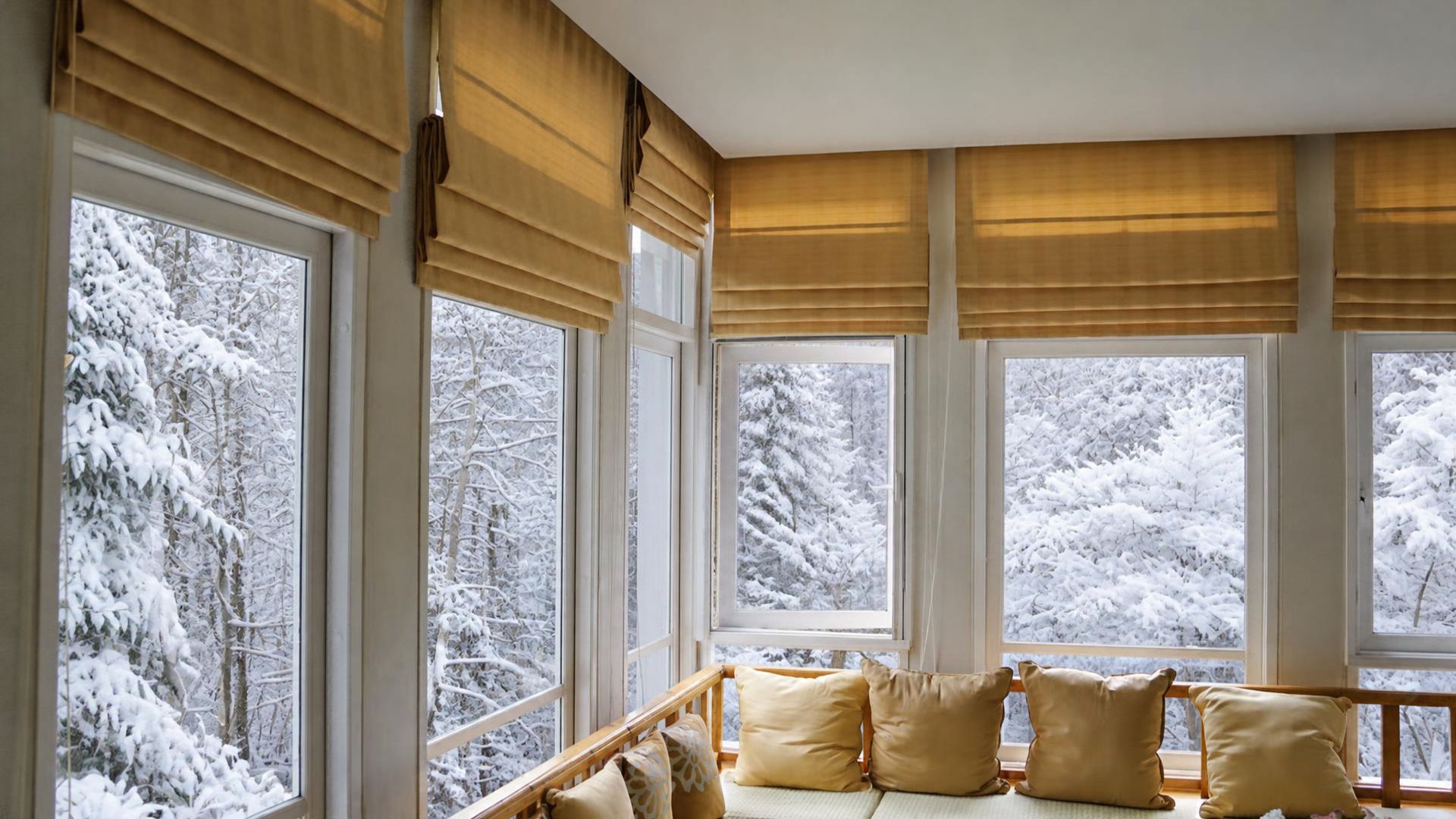
The best window treatments for cold Michigan winters are insulating cellular shades and lined or thermal drapes, ideally layered together. Cellular shades trap air in their honeycomb cells to slow heat loss, and lined drapes add a second barrier that helps block drafts and cold radiating off the glass. Fitted well and closed at night, they can make your rooms noticeably warmer and more comfortable.
Windows are one of the easiest places for heat to escape, and a Michigan winter makes that obvious fast. Here’s how to choose window treatments that actually help keep the cold out.
Why Windows Make Your Home Feel Colder
Glass doesn’t hold heat well. On a cold day, a window pulls warmth out of the room and can leave you feeling a chill even when the furnace is running. You might notice cold spots near windows, drafts around the frame, or a room that never quite warms up.
Replacing windows is expensive, but covering them well is a much easier fix. The right window treatments add a layer between you and the cold glass, and they can help your heating system work less to keep the house comfortable.
Cellular Shades: The Top Pick for Insulation
Cellular shades, sometimes called honeycomb shades, are widely considered the best insulating window shade. Their layered cells trap pockets of air against the window, which slows the transfer of heat.
Researchers at Oak Ridge National Laboratory, which is managed for the U.S. Department of Energy, tested cellular shades against generic venetian blinds over two heating seasons in a home in the Southeast. The room with cellular shades achieved up to 24 percent heating energy savings. That was one study in one home, so your results will vary, but it shows how much a good insulating shade can help. Fit matters too, which is why a custom fit makes such a difference. Shades that sit close to the glass with minimal gaps do a better job than ones that leave openings around the edges.
Cellular shades come in different cell sizes and light control options, including light filtering and blackout, so you can pick the look and function you want for each room.
Lined and Thermal Drapes
Drapes do more than dress up a room. Heavy, lined drapes add a thick layer of fabric between the window and the room, which helps block drafts and soften that cold feeling near the glass. The Department of Energy notes that conventional draperies, when drawn during cold weather, can reduce heat loss from a warm room by up to 10 percent.
To get the most out of your drapes, choose a lined or thermal option rather than a thin, sheer fabric. Hang them as close to the window as you can and let them fall to the sill or the floor. The more completely they cover the window, the better they work.
Layering for the Best Results
You don’t have to choose just one. Pairing cellular shades with lined drapes gives you two layers of protection and plenty of flexibility. Keep the shades lowered for insulation and privacy, and draw the drapes at night for extra warmth. In the daytime, open both on sunny windows to let free warmth in.
Layering also gives you more design options. The shades handle light control and function, while the drapes add color, texture, and softness to the room.
Other Good Options
Roman shades with thermal lining. These give you a tailored, fabric look with an extra insulating layer behind the face fabric.
Interior shutters. Shutters add a solid layer over the window, and the adjustable louvers let you control light and privacy through the day. Composite and real wood shutters both work well in living areas and bedrooms.
Roller shades with blackout fabric. These are a simple, clean option for bedrooms, and the thicker fabric adds a bit of insulation over the glass.
Tips for Getting the Most Warmth
Close them at night. Heat loss is highest after dark. Closing your drapes and lowering your shades in the evening, and on windows that don’t get sunlight during the day, makes a real difference.
Open them on sunny days. South facing windows let in free warmth when the sun is out. Opening your treatments during the day helps take advantage of it.
Get a snug fit. Gaps let cold air leak around your shades. Custom measuring and professional installation help you avoid that.
Don’t block your heat. Make sure drapes don’t hang over heat registers or baseboard heaters, since that can trap warm air behind the fabric. Choose a length that clears them, or position drapes so airflow isn’t blocked.
Keep them clean. Dust and grime build up on window treatments over time, and cleaning helps them look and function their best. Professional cleaning is a good idea for delicate fabrics.
Don’t Forget Comfort and Style
Insulating window treatments don’t have to look heavy or boring. Today’s cellular shades come in a wide range of colors and fabrics, and lined drapes can be made in nearly any pattern or texture you can imagine. You can keep your rooms bright and stylish while still getting the winter protection you’re after.
Start Before the Cold Really Hits
Custom window treatments take time to measure, order, and install. Starting your project in the fall means you’ll have your new shades and drapes in place before the coldest weather arrives, instead of waiting until you’re already shivering.
How Window Decor Store Can Help
Window Decor Store has been helping Southeastern Michigan homeowners find the right window treatments for their homes. We carry insulating cellular shades, custom drapes, interior shutters, and more from brands including Hunter Douglas, Graber, Norman, and Alta. Our team includes a certified Hunter Douglas installer, Power Professional, and Design Expert, so you get expert guidance from the first measurement to the final installation.
Stop by our showroom at 40500 Grand River Ave in Novi, Monday through Friday from 9:00am to 4:30pm, or call us at (248) 516-3534 to talk through the best options for staying warm this winter.
Frequently Asked Questions
What is the best window treatment for keeping heat in during winter? Cellular shades are widely considered the best insulating shade, and pairing them with lined or thermal drapes gives you even more protection. The U.S. Department of Energy says tightly installed cellular shades can reduce heat loss through windows by 40 percent or more.
Do thermal drapes actually make a difference? Yes, lined drapes add a thick barrier that helps block drafts and cold from the glass. The Department of Energy notes that conventional draperies can reduce heat loss from a warm room by up to 10 percent when closed during cold weather.
Should I close my window treatments during the day or at night in winter? Close them at night and on windows that don’t get sun during the day. On sunny windows, open them during the day to let in free warmth.
Can I layer shades and drapes together? Yes, layering is one of the best ways to insulate a window. Cellular shades handle insulation and privacy, while lined drapes add a second layer and a finished look.
Why does a custom fit matter for insulating shades? Insulating shades work best when they sit close to the window with minimal gaps. Custom measuring and professional installation help prevent cold air from leaking around the edges.
Window Decor Store proudly serves homeowners and businesses across Michigan, including Washtenaw County, Oakland County, Livingston County, and surrounding communities. Questions about any of our window treatment services? Contact our team today.